Blog posts
Product Updates
Product Updates
Beacon Product Update - October 2026

David Simpson
October 13, 2026

Since March we’ve been working the biggest, most far-reaching changes to Beacon’s infrastructure that we’ve ever made, and today I’m really excited to announce a major milestone in that journey.
We’ve been working to move our main data store from Amazon (AWS) to Google (GCP). Specifically, we’re moving to a database called Google Spanner. Over the past 6 months we have completely rebuilt our main data processing and storage system from scratch around this technology.
Google originally developed Spanner to run their own mission-critical applications which require massive scale and strong reliability with zero downtime. Gmail and YouTube run on Spanner.
Google has since made Spanner available to other organisations, and it’s now used to power Uber, Shopify, and Walmart. It has a set of functionality that makes it perfect for powering Beacon.
As of today, all newly created Beacon accounts are running on our new infrastructure powered by Google Spanner. Over the next few weeks, we will be migrating all of our customers over to the new system. We’ve designed this process so that there is zero downtime and no action is required from you during the migration. The easiest way to tell whether you’ve been migrated is to look in your account for the new search bar below.
We can’t provide details about the timeframe for migrating any specific customer, but we’re expecting all customers to be migrated before Christmas.
You’ll notice a number of improvements once your account has been migrated to Spanner.
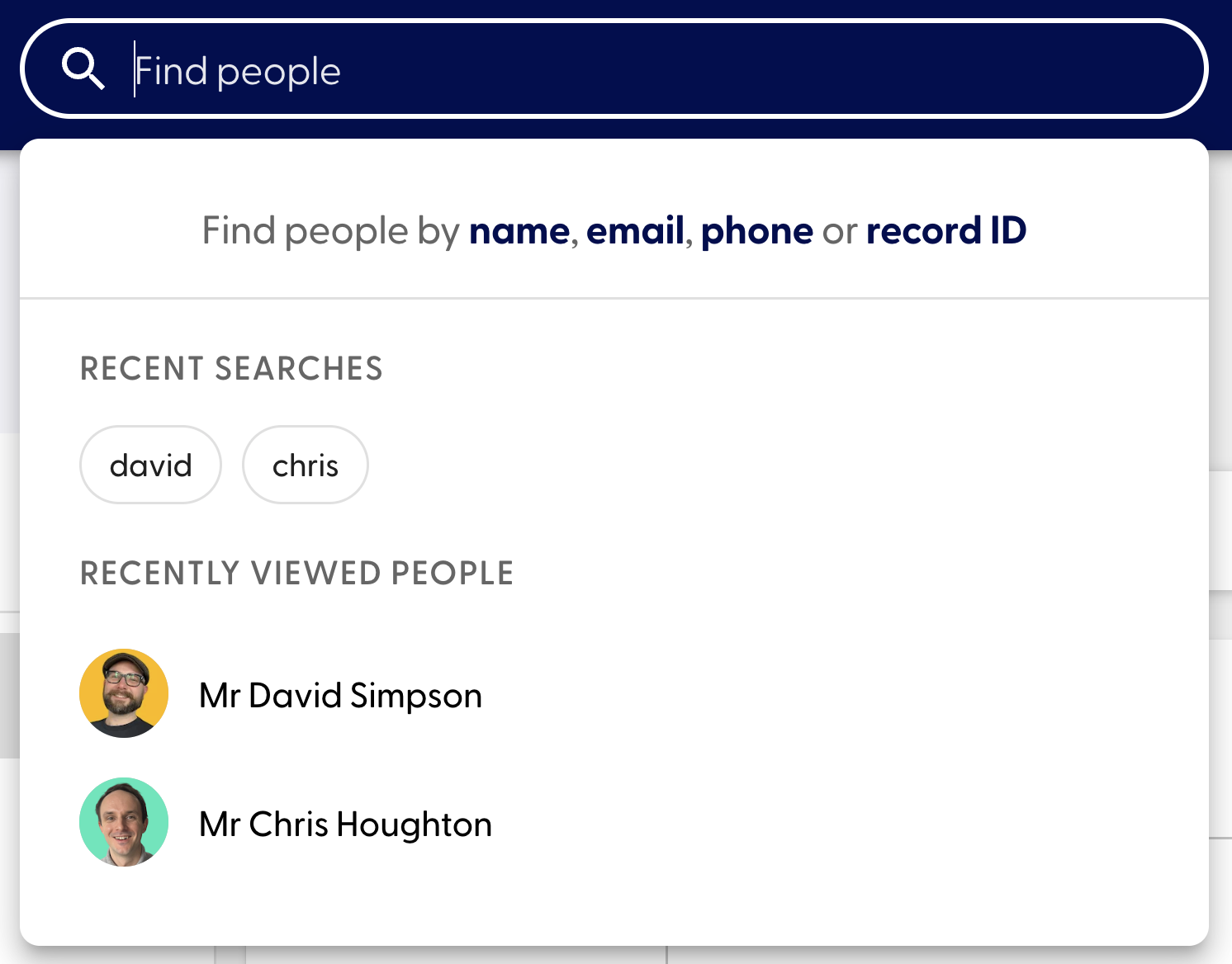
The most noticeable change is the new search bar at the top of Beacon:

From this search bar you can quickly find people by their name, email, phone number or Beacon record ID. You can also see your recent searches and people whose records you have recently viewed.
Previously, when filtering on specific Districts (e.g. W2) or Areas (e.g. W) for a postcode, you'd often have to use a wildcard to do this i.e. "W%".
Now, there is a new filter option to make filtering by partial postcodes much easier. When you filter on a Postcode, you can now select Area (e.g. SE or MK), District (e.g. SE2 or MK3) or Region (which is a combination of postcode areas).

You’ll notice everything feels just that little bit faster. List views, Rollups, Smart Fields, and our API have all seen major speed boosts, for all account sizes. Our largest customers will see the biggest improvements, but everyone’s experience has had an upgrade.
There are some nuances and changes to expect with our migration to Spanner. For the detail-focussed folks, we’ve prepared a guide article about what’s changing with Spanner.
From a GDPR standpoint, Google is already named as one of our sub-processors. You can review all Beacon sub-processors on our sub-processors page.
As you may expect, the Beacon engineering team are laser focussed on keeping your data secure, and the migration to Google Spanner has been undertaken with security absolutely front of mind, utilising the latest best practices and tooling.
We’ve launched a dedicated Trust Centre to consolidate information about Beacon's security measures and compliance standards, and request additional documentation under NDA: https://trust.beaconcrm.org/
We're finishing our new contact preferences system to support soft opt in alongside the spanner migration, with the intention of launching in January 2027.




.png)